
Stun Gun vs. TASER: What's the Difference?
Stun Gun vs. TASER: What's the Difference?
Many people use the terms "stun gun" and "TASER" interchangeably, but they are actually quite different devices. Understanding the distinction can help you make a smarter purchasing decision for your personal safety.
How Stun Guns Work
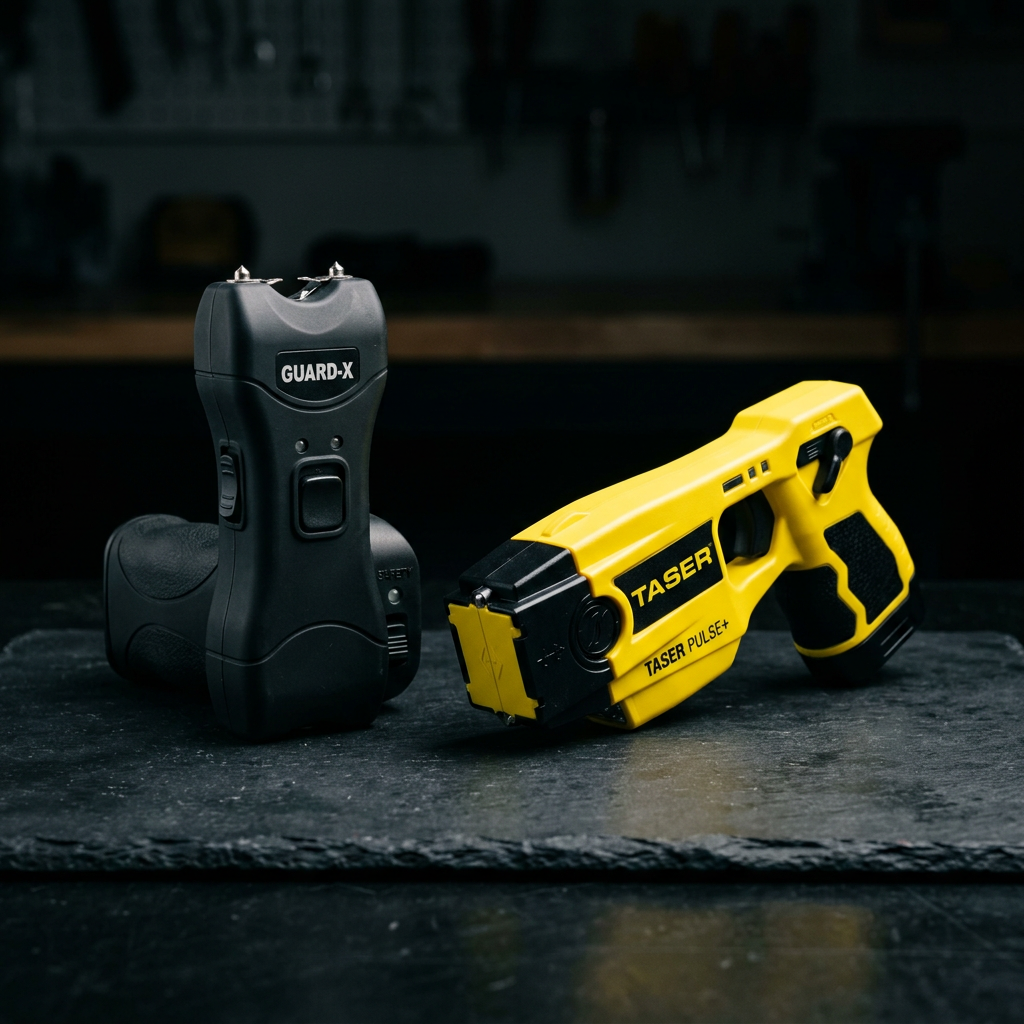
A stun gun is a contact weapon, meaning you must physically press it against an attacker to deliver the shock. It delivers a high-voltage, low-amperage electrical charge that disrupts the body's neuromuscular system, causing temporary muscle paralysis and disorientation.
Pros of Stun Guns:
- More affordable
- Compact and easy to carry
- Rechargeable options available
- Wide variety of styles (disguised as lipstick, phone cases, etc.)
Cons of Stun Guns:
- Must be in direct contact with attacker
- Less effective through thick clothing
How TASERs Work
TASER is actually a brand name (standing for Thomas A. Swift's Electric Rifle). TASERs are projectile weapons that fire two small darts connected to wires, delivering an electrical charge from a distance of up to 15 feet.
Pros of TASERs:
- Can be used from a distance
- More effective neuromuscular disruption
- Trusted by law enforcement
- Works through clothing
Cons of TASERs:
- More expensive
- Larger and heavier
- Single-shot limitation (some models)
Which Should You Choose?
For everyday carry, a stun gun is a practical and affordable choice. If you want the ability to defend yourself from a safe distance, a TASER is worth the investment.
Always check your state and local laws before purchasing either device, as regulations vary significantly across the country.